How to Build a Bike & Cargo Rack for Camper Van Rear Door for Mercedes Sprinter, Ford Transit, or Dodge Promaster
For carrying bikes on the Mercedes (or Dodge) Sprinter Camper Van, I've been using a hitch mount rack made by 1UP USA. This is an excellent bike rack. However, I can not use it when I pull a trailer, so we have to put all 4 bikes inside the back of the van, which is very inconvenient.
There are lots of expensive rear door hinge mount modular racks for the 2007 and newer Sprinter vans, but nothing available for a 2002-2006 T1N sprinter van like I have. Therefore I need to build my own, and in doing so will actually save about $2000. A rear door bike rack for 2007+ vans can cost over $3000. The materials to build one from 80/20 extrusion are about $1000. It's not a cheap project, but it will be worth it.
When I'm not pulling a trailer, the door rack is modular and can be used to carry other items, like the paddle boards.
This is the initial design. The main frame is made from 1.5in 80/20 aluminum extrusion. This is a strong material and still relatively lightweight. Welding a frame together from tube would be even lighter, but it reduces modularity. The 80/20 extrusion has t-slots to which anything can be attached and easily modified.

This is the parts list for the frame only. This doesn't include the bike wheel holder portion yet. Still working out the details on that.

HOW TO PREVENT CORROSION
There's one big problem with the hardware available for 80/20 to be used outdoors. The standard steel t-nuts are not very well protected against corrosion and will rust rapidly outdoors. They offer stainless t-nuts, but stainless and aluminum have poor galvanic corrosion resistance. Fortunately, the aluminum extrusion is anodized, which is electrically insulating. As long as the anodizing is not damaged, that should limit the corrosion between the aluminum and stainless. However, realistically, the anodizing easily gets damaged during tightening.
Fortunately, we're not threading into aluminum. A stainless bolt will pass through holes in the aluminum and thread into a stainless nut. So it's just the surface contact faces and the non-threaded hole faces that need protection.
Corrosion Protectors
Tefgel or Lanocote are commonly applied to dissimilar metals to prevent galvanic corrosion. They work by sealing the space between the dissimilar metals to prevent water from getting in the space and creating a galvanic pathway. This is probably the best solution for this application.
Non-conductive Washers
Non-conductive washers made from plastic or fiber materials can be placed between the head of the stainless screw and the aluminum part. The problem is that this is a structural, load-bearing application where the bolts will need to be torqued very tightly. Therefore, non-metal washers may not be suitable.
Combining a stainless washer to spread the load with a non-metal washer underneath may work.
Sacrificial Washers
A galvanized washer between the head of the stainless screw and the aluminum part will act as a sacrificial washer. Zinc galvanizing is more reactive than aluminum and will corrode first. Once the zinc is gone, the aluminum will begin to corrode. Keep an eye on the washers, and once they start to rust, it is time to replace them. They should last a very long time in an outdoor, open-air environment, away from saltwater.
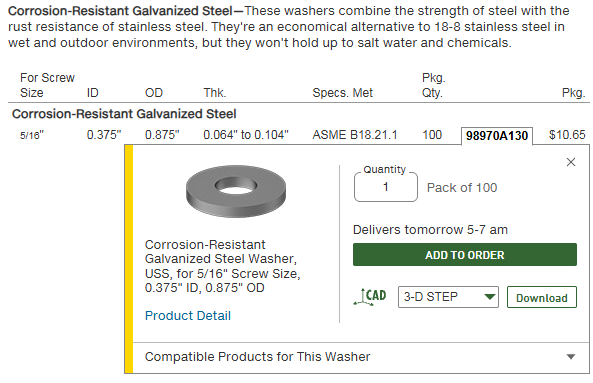
Aluminum washers can also be used as sacrificial washers in contact with the stainless screw. A hard-anodized washer would be the best because it is insulating. The only 5/16 aluminum washers I could easily find were either uncoated or zinc-yellow-chromate plated. The zinc plating may not provide much protection and oxidize quickly in the presence of stainless steel.

HOW TO BUILD IT
The vertical 80/20 extrusion pieces arrived precut to 6ft length. I originally designed the rack as 5ft tall, but decided to leave it 6ft so didn't need to cut those.
The horizontal 80/20 extrusion pieces need to be cut down from 6ft lengths to 27.1875 inches. I'm using a miter saw with a carbide blade to cut those.
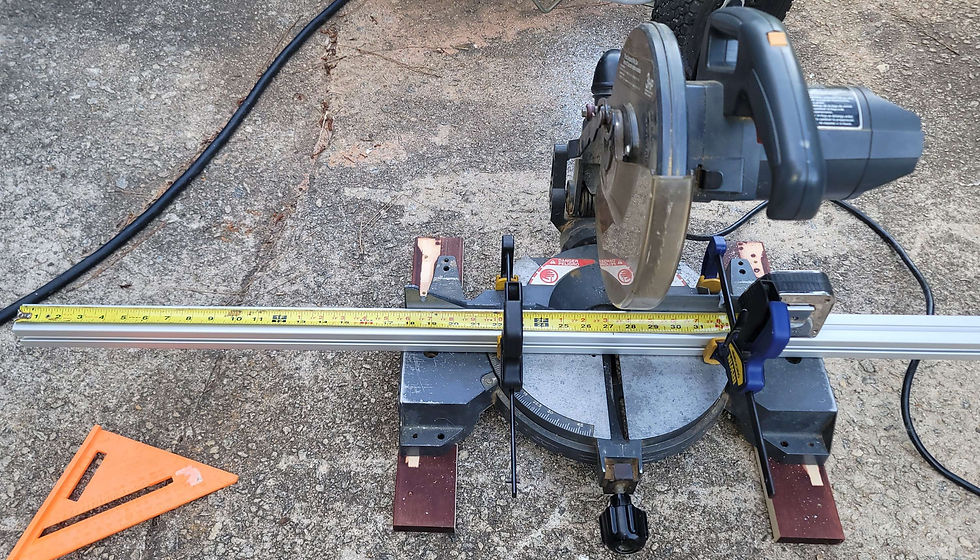
This is the stock cut. It is much cleaner than my cut using a worn out saw blade. A new saw blade should give you a clean cut.

Affiliate Disclaimer
The products shown here were purchased by me with the intent to use them. I did not receive any free items, and I am not being paid or compensated for this review. The video, description, and comments may contain affiliate links. If you click on a link, I may receive a commission. Money earned helps to support my channel and bring you more informative videos about engineering, crafting, and DIY


Comments